Prasanta Paul |
THE unveiling of a national counter–terrorism policy titled ‘Prahaar’ that seeks to put in place a multi–layered strategy anchored in “zero tolerance”, intelligence–led prevention and coordinated disruption of extremist violence, could not have come at a more opportune moment.
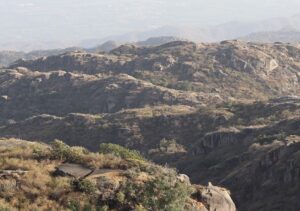
Following the successful conclusion of a gruelling 326–day high–altitude operation, the Indian Army’s White Knight Corps has on Monday released photographs of the seven terrorists neutralised in the Chatroo belt of Kishtwar, Jammu and Kashmir. The images serve as a visual confirmation of the major counter–insurgency victory, which saw the elimination of a high–ranking commander and several members of the Pakistan–based Jaish–e–Mohammad.
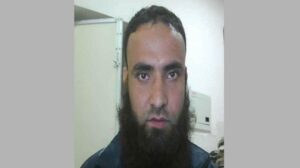
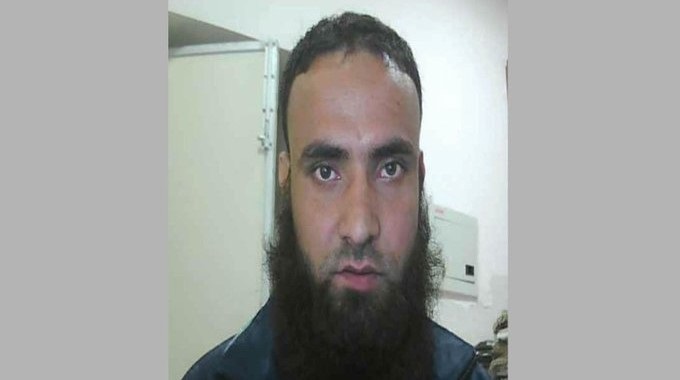
■ Shabir Ahmad Lone
The operation, a senior army spokesman claimed, was marked by its technical sophistication, utilising advanced drones and satellite imagery to track the militants without any casualties to the Indian security forces. By releasing the photos, the Army aims to provide transparency and counter any potential misinformation regarding the identity and number of casualties.
Barely a couple of days prior to this, Delhi police unearthed and nabbed eight overground saboteurs from West Bengal and Tamil Nadu who were believed to be conspiring on a major attack to be carried out somewhere in the country. The accused are suspected to be belonging to a terror module backed by the Pakistan–based LeT handlers, spy agency ISI and a Bangladesh militant group.
Resident of Ganderbal in Kashmir, Lone shifted base to Bangladesh after his release on bail in 2019 from jail; it was preceded by his arrest in 2007 for possession of an AK–47 and some grenades as he was planning some fidayeen attack on a very senior political leader in Jammu and Kashmir
Accused’s Bangladesh Link
Two of the accused who are from West Bengal, are claimed to be Trinamool Congress activists by their family members, triggering a political uproar in the state before the assembly elections.
The module, sleuths of Delhi police claim, was allegedly run by Shabir Ahmed Lone of Bangladesh who used to be in direct touch with 26/11 mastermind Hafeez Sayeed and LeT (Laskar–e–Taiba) operations chief Zaki–ur–Rahman Lakhvi.
A resident of Ganderbal in Kashmir, Lone shifted base to Bangladesh after his release on bail in 2019 from jail; it was preceded by his arrest in 2007 for possession of an AK–47 and some grenades as he was planning some fidayeen attack on a very senior political leader in Jammu and Kashmir.
Prahaar: Oblique Hint to Pakistan
Ironically, coinciding with the release of the ‘Prahaar’ document by the union Ministry of Home Affairs (MHA), it made a directly oblique hint to Pakistan: “There has been a history of sporadic instability in the immediate neighbourhood of India, which has often given rise to ungoverned spaces. Besides, a few countries in the region have sometimes used terrorism as an instrument of State policy.”
A senior army spokesman claimed, was marked by its technical sophistication, utilising advanced drones and satellite imagery to track the militants without any casualties to the Indian security forces
As per the document, the policy has been structured around seven pillars — prevention, response, aggregating internal capacities, human rights and “Rule of Law”–based processes, attenuating conditions enabling terrorism including radicalisation, aligning international efforts, and recovery and resilience through a whole–of–society approach.
The policy flags cross–border terrorism and global terror outfits as key threats.
“India has since long been affected by sponsored terrorism from across the border, with Jihadi terror outfits as well as their frontal organisations continuing to plan, coordinate, facilitate and execute terror attacks in India. India has been on the target of global terrorist groups such as Al–Qaeda and the Islamic State of Iraq and Syria (ISIS), which have been trying to incite violence in the country through sleeper cells,” it said.
It also noted that terrorists operating from foreign soil have used technologies including drones to facilitate terror–related activities in Punjab and Jammu & Kashmir.
LeT Link to The Terror Plot
A detailed and thorough investigation which is currently underway both in Delhi as well as Kolkata, has led to a string of shocking revelations. The latest anti–India posters that appeared in parts of New Delhi and Kolkata, were printed in Kolkata after the same was designed and sent by Lone through a PDF from Bangladesh.
The latest anti–India posters that appeared in parts of New Delhi and Kolkata, were printed in Kolkata after the same was designed and sent by Lone through a PDF from Bangladesh
Not only that, the LeT handlers had reportedly tasked Lone to recruit and radicalise illegal infiltrators from Bangladesh into West Bengal; on him hinged the responsibility of organising fake documents including Aadhaar & voter cards besides other residential proofs and secure logistical bases.
A safe residential apartment in Kolkata was also taken on rent by Lone where verbal training was believed to be provided to the new recruits from Bangladesh after their complete ‘brainwash’. Sleuths, however, did not divulge the location of the apartment due to the sensitive nature of the investigation. ■
Prasanta Paul served Deccan Herald as the Chief of Bureau, Calcutta for nearly two decades before switching to work with various TV channels such as Al-Jazeera, CNN, German TV and CBS. Mr. Paul who accompanied former Prime Minister Atal Behari Vajpayee on his overseas tour of Singapore and other Asian countries, travelled extensively to Bhutan, Sikkim and Darjeeling besides other Northeastern states.