Prasanta Paul |
THE June 2020 Indo–China Galwan skirmish at Ladakh is still fresh in our memories; but there is no letup in the aggressive posture of the Chinese troops along the Line of Actual Control (LoC) in the Himalayas.
Though the bugle of peace between India and China, two nuclear–armed nations may not be blown now, the prospect of another tension in the troubled borders of Arunachal Pradesh has been nipped in the bud by an alert Indian Army, thanks to their tactical use and deployment of artificial intelligence or AI technology.
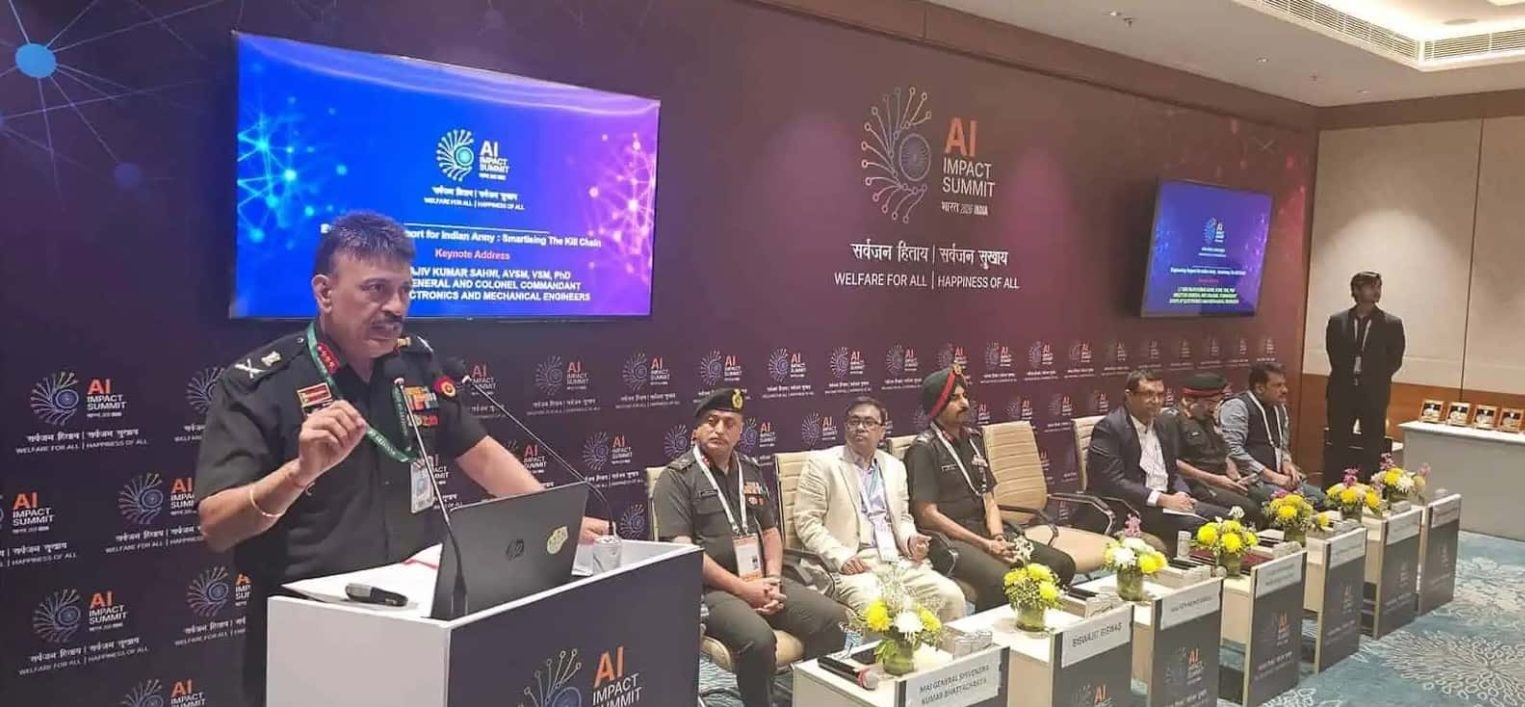
■ At a specialised seminar titled Engineering Support for the Indian Army: Smartising the Kill Chain during the AI Impact Summit 2026 at Bharat Mandapam in New Delhi, senior military leaders, industry experts and academic researchers examined how AI can improve equipment readiness and mission outcomes across combat operations | CSR Journal
The resultant tactical moves immediately launched by the highly trained special forces unit of the army helped avert an imminent eruption of a bitter confrontation, Lt Gen Dinesh Singh Rana, Commander–in–Chief of the Indian Army‘s Strategic Forces Command, said.
AI and Global Warfare
“A global war is already on over who will lead and be ahead in AI technology” General Rana said adding that the United States and China have already joined in a cat and mouse game.
For security along the Line of Actual Control (LAC) in Arunachal Pradesh, a low–cost AI system helped India detect early warning signals about nefarious Chinese military build–up in a disputed sector
Indicating India too has not been lagging behind in this respect, Gen Singh said that during his tenure as the commander of a corps responsible for security along the Line of Actual Control (LAC) in Arunachal Pradesh, a low–cost AI system helped India detect early warning signals about nefarious Chinese military build–up in a disputed sector of the northeastern state.
“Using the low–cost AI technology, we could see through the system that the Chinese Army was constructing something along the LAC and immediately preventive measures followed and a confrontation could be avoided,” Gen Rana observed while addressing the ‘India AI Impact Summit 2026′ in New Delhi.
Terming the Chinese troops’ actions as “unprecedented”, Dinesh said India had also ensured timely deployment of troops along the LAC. “AI technology can easily identify the shortcomings of various defense systems. This is beneficial for various types of military operations; our defense system is fast improving. ”
This, he said, helped ensure “no casualties” on the Indian side and made the evacuation planning easy. According to him, in recent times, AI has become very important in the field of national security, strategic issues and warfare.
Arunachal Pradesh – A Potential Front
A new potential front has been emerging in Arunachal Pradesh, raising concerns for India’s defense strategy. Reports and satellite images suggest China is accelerating completion of a high–speed railway line from Nyingchi to Lhasa (approx. 435 km).
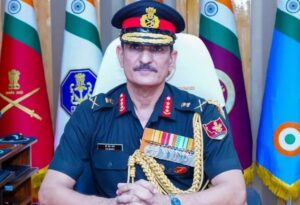
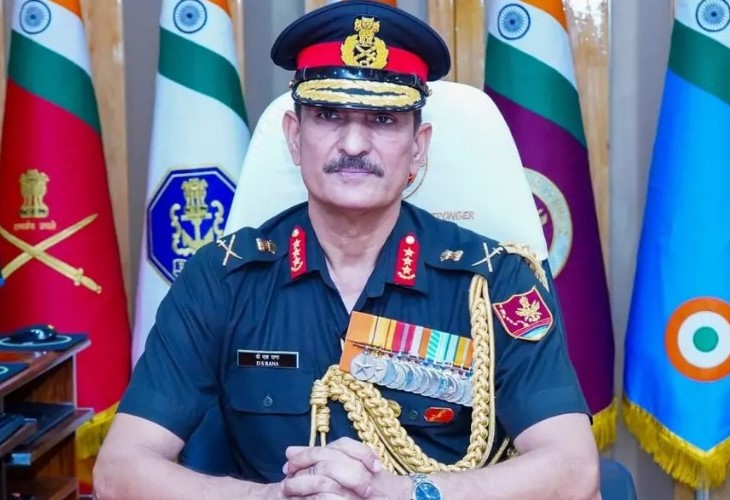
■ Lt Gen Dinesh Singh Rana, Commander–in–Chief of the Indian Army’s Strategic Forces Command
The railway’s starting point at Nyingchi is just 50 km from the Arunachal border, making it strategically sensitive. Once operational, the railway will bring China dangerously close to two critical border points: Nathu La in Sikkim and a sensitive village in Arunachal Pradesh.
The Commander–in–Chief noted that the AI race is no longer a “futuristic concept” limited to a software system and the technology has now become central to power competition globally. It now extends to workforce development, infrastructure, military doctrine and command structures.
Railway’s starting point at Nyingchi is just 50 km from the Arunachal border, making it strategically sensitive. Once operational, the railway will bring China dangerously close to two critical border points: Nathu La in Sikkim and a sensitive village in Arunachal Pradesh
The AI–powered systems ‘can both conduct sophisticated offensive operations and strengthen defensive capabilities by plugging gaps and identifying vulnerabilities’, he felt.
Rana flags risks of superintelligence
Lt Gen Rana however, highlighted the risks associated with the system’s transition into artificial superintelligence (ASI). This might create both opportunities as well as significant challenges.
ASI or advanced AI systems could potentially be misused by rogue actors, similar to nuclear deterrence dynamics witnessed during the Cold War and non–proliferation of these systems would be more challenging than nuclear capabilities.
Hence, India ought to develop a comprehensive AI security doctrine, he stressed. ■
Prasanta Paul served Deccan Herald as the Chief of Bureau, Calcutta for nearly two decades before switching to work with various TV channels such as Al-Jazeera, CNN, German TV and CBS. Mr. Paul who accompanied former Prime Minister Atal Behari Vajpayee on his overseas tour of Singapore and other Asian countries, travelled extensively to Bhutan, Sikkim and Darjeeling besides other Northeastern states.