Prasanta Paul |
HAS the US–Iran–Israel conflict brought India and Bangladesh further close much to the chagrin of Pakistan and followers of Md Yunus and the ilk of Jamat ?
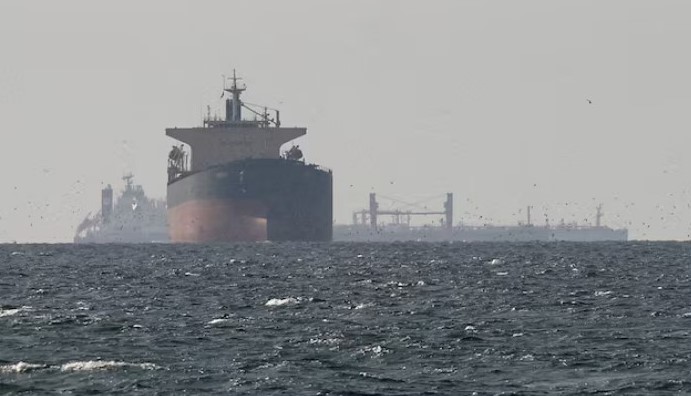
■ Cargo ships in the Gulf, near the Strait of Hormuz, as seen from northern Ras al-Khaimah, near the border with Oman’s Musandam governance, amid the U.S.-Israeli conflict with Iran, in United Arab Emirates, March 11, 2026 | Reuters
The worsening prospects of a worldwide energy crisis and India’s mature handling of the same might have prompted the Tarique Rahman–led government in Bangladesh to seek urgent assistance from New Delhi in tackling the domestic energy demand.
The BNP (Bangladesh National Party) government, official reports have confirmed, is inching towards inking a deal with India which will ensure refining of heavy Russian crude, meant for Bangladesh, first in India before its re–dispatch to a Bangladesh port to meet the critical domestic energy demand.
Official reports have confirmed, is inching towards inking a deal with India which will ensure refining of heavy Russian crude, meant for Bangladesh, first in India before its re–dispatch to a Bangladesh port
The fine–tuning of this government–to–government agreement is currently being worked out as the current US blockade of the Strait of Hormuz has failed to crack the steeled nerve of Iran which has adopted an attitude of ‘Destroyed, but not defeated.’
Dhaka, the treaty envisages, is to disburse the cost of import, refining and re–exporting the oil to New Delhi; this is part of Bangladesh’s bid to overcome the present level of uncertainty to meet the domestic demand of energy, officials explained.
Coming as it does after New Delhi’s dispatch to Dhaka approximately 13,000 to 17,000 tonnes of diesel so far this month, the energy deal is poised to open a new chapter in Indo–Bangla trade relations especially in the wake of Bangladesh foreign minister Mr Khalilur Rahman’s recent visit to New Delhi.
New Delhi’s dispatch to Dhaka approximately 13,000 to 17,000 tonnes of diesel so far this month, the energy deal is poised to open a new chapter in Indo–Bangla trade relations especially in the wake of Bangladesh foreign minister Mr Khalilur Rahman’s recent visit to New Delhi
The diesel is sent via the 131.5–km India–Bangladesh Friendship Pipeline from Numaligarh Refinery Limited (NRL) in Assam. While the target of diesel import in April is projected to touch around 25,000 tonnes, Dhaka plans to lift close to 180,000 tonnes from New Delhi in 2026 to ensure energy stability and security.
Mr Rahman held high–level meetings with NSA (National Security Agency) chief Ajit Doval and external affairs minister S Jaishankar. “We want a normal relationship with India based on mutual respect, dignity, and interests,” he said before his departure after a very ‘fruitful deliberation.’
While Bangladesh has been grappling with the oil and gas crisis since the outbreak of the Gulf war, India’s Reliance Industries Ltd, operator of the world’s biggest refining complex, is busy processing and refining both the Russian and Iranian heavy crude.
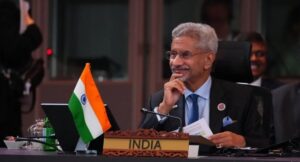
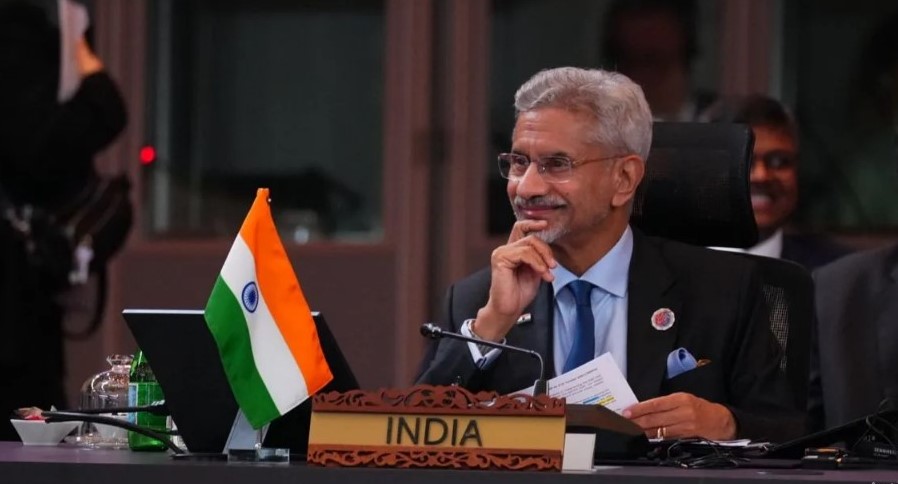
■ S Jaishankar
‘India Catch’
In fact, the more than a–month–long Gulf war has spiked the inflationary curve in such a way that several countries around the world have introduced energy rationing despite the so–called mediation by Pakistan. And herein lies the main catch or the ‘India catch’.
We see Steve Witkoff and Jared Kushner, special envoys of President Donald Trump, flying into Islamabad; we see the Pakistan army chief on the phone with Trump or making an official visit to Iran. The world is calling Pakistan the ‘Mediator’ during this explosive Iran–US–Israel conflict. But there is something more than meets the eye.
Bangladesh has been grappling with the oil and gas crisis since the outbreak of the Gulf war, India’s Reliance Industries Ltd, operator of the world’s biggest refining complex, is busy processing and refining both the Russian and Iranian heavy crude
Pakistan is the ‘Messenger’; India is the ‘Mediator’. There is a difference between carrying a letter and writing the terms of the deal. To understand why India has become the pivot point in this war, we have to look past the optics of Islamabad and focus on the quiet, high–stake diplomacy happening in New Delhi.
Let’s start with the hierarchy of communication. President Trump made a choice. He didn’t call a regional proxy; he called Prime minister Narendra Modi twice during the height of the ongoing war. This was not a courtesy call. They spoke on February 2 to announce progress in a trade deal, and then on March 24 to discuss the situation in West Asia; plus, a third time during the middle of April.
According to the US Ambassador in India, on both occasions, it was a lengthy, substantive, leader–to–leader conversation about the state of the war. Why does it matter ? The United States understands this: to influence a conflict involving Iran, you don’t go through a country Tehran distrust; you go through the only major power with credibility on all sides simultaneously.
Trust Deficit
This trust deficit is India’s forte. Pakistan is in a structural trap; it has a defensive agreement with Saudi Arabia — a nation actively pressing for the destruction of the Iranian regime. Tehran cannot completely trust Pakistan as neutral. Pakistan also lacks complete trust from the United States.
India is different; foreign minister S. Jaishankar had said, “India is not a broker nation, India does not mediate for a fee.” This is critical; India is a big ‘stakeholder’ in a different way. While the world focused on flights to Islamabad, Jaishankar was in direct talks with the Iranian ambassador in New Delhi. This isn’t casual communication; it is granular, active mediation.
India has spent decades building energy ties with Iran with whom she operates the “Chhabahar Port’; it has given India strategic economic ‘skin in the game.’ When India speaks, Iran listens, because India is their primary gateway to the global market that do not require total capitulation to the West.
Pakistan is the ‘Messenger’; India is the ‘Mediator’. There is a difference between carrying a letter and writing the terms of the deal. To understand why India has become the pivot point in this war
At the same time, India maintains a strong partnership with Israel. This is a ‘magic trick’ of Indian diplomacy. How do you develop a partnership while developing Iranian infrastructure ? India focuses on interest, not ideology.
Israel trusts India for defense reliability; Iran trusts India for energy partnership. The US trusts India because it can act as a counterbalance in the region. No other nation occupies this intersection of trust.
Economic Incentives
Now, let’s look at economic incentives; India imports 90 per cent of its crude oil, much of it through the Strait of Hormuz; any disruption — any escalation — paralyses the economy. India has some of the world’s only refinery complexes capable of processing Venezuelan and Iranian heavy crude. This is a critical leverage; Washington needs India to process oil for global stability; Tehran needs India to maintain a market. India’s refineries act as a neutral industrial zone.
This industrial capability makes India indispensable to global energy markets during a crisis. By mediating behind the curtain, India positions itself as a bridge between BRICs (Brazil, Russia, India and China) and the global West. India signals ‘We can talk to the Kremlin, the White House, the Knesset and the Iranian Majlis — all in one afternoon’.
So, when headlines focus on Pakistan, we are seeing tactical moves — a messenger delivering warnings. The real negotiations where economic guarantees and red lines are drawn, are happening in New Delhi. ■
Prasanta Paul served Deccan Herald as the Chief of Bureau, Calcutta for nearly two decades before switching to work with various TV channels such as Al-Jazeera, CNN, German TV and CBS. Mr. Paul who accompanied former Prime Minister Atal Behari Vajpayee on his overseas tour of Singapore and other Asian countries, travelled extensively to Bhutan, Sikkim and Darjeeling besides other Northeastern states.